What should a new efoil owner do when local waterway rules restrict powered board launches?
Premium efoils are usually treated as motorized vessels, not surfboards, which means access is decided by harbor masters, park districts, and state boating agencies. Here is how to map the rules before you commit five figures.
Why Regulators See an Efoil as a Powered Vessel
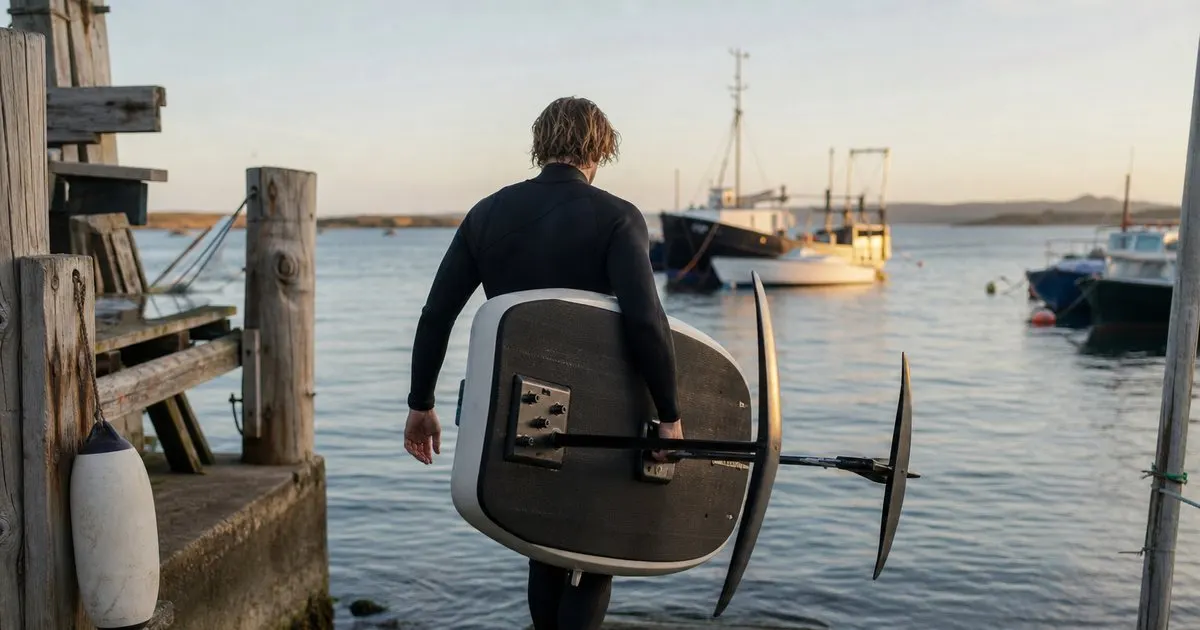
An efoil looks like a surfboard and behaves like a small boat, and the second description is the one that matters to whoever controls your water. A motor, a battery, and a hull capable of carrying a person is usually enough for a craft to fall under motorized vessel rules, even when the board is close to silent and leaves almost no wake. Definitions vary widely between states, and between the bodies that manage individual lakes, harbors, and beaches, so the practical answer is rarely a clean yes or no. Some places treat an efoil like any electric boat, some group it with personal watercraft, and some have written nothing at all, which leaves the call to whoever manages the ramp on the day you show up. Related: How do you choose the right electric hydrofoil board for calm coastal waters?
The consequence for a buyer is that access behaves like a specification, in the same way range or wing area does. A board that suits your weight and your riding style is worth very little if the only water within an hour of home bans powered craft outright, or confines them to a channel too busy to learn in. Buyers who research the legal picture early often revise their shortlist, because a compact board one person can carry off a beach opens far more sites than a heavier setup that realistically needs a ramp, a cart, and a parking permit. Do that homework before the deposit rather than after delivery. Related: Which wing and mast setup suits a beginner learning to ride an efoil?
Keep reading: How do you choose the right electric hydrofoil board for calm coastal waters?, What battery range should a premium efoil board realistically deliver on a full charge?, Which wing and mast setup suits a beginner learning to ride an efoil?. See how Efoilvault helps you the rider guide to premium electric hydrofoil boards.
Mapping the Authorities That Control Your Launch Sites
There is rarely one office to call. A single stretch of coast can involve a state boating agency for registration, a municipal parks department for the beach itself, a harbor master for the moored area beyond it, and a coastal or wildlife authority for any protected zone nearby. Inland, a lake may be managed by a county park district, a utility company, a homeowners association, or a state agency, and each of those can set its own motor rules independently. Start by identifying who physically controls the parking lot and the water entry, because that entity usually writes the rule you will be asked about while standing on the sand with a heavy board.
When you call, describe the craft honestly and concretely: an electric board, a sealed lithium battery, a top speed in the range most premium boards reach, no combustion engine, no fuel, minimal wake. Then ask three questions. Is the craft permitted here, does it require registration or a launch permit, and are there hours, zones, or distance-from-shore limits. Write down the answer and the name of the person who gave it. Rules change, staff turn over, and a short written note in your phone has settled more ramp-side disagreements than any argument about how quiet the board is. Related: What battery range should a premium efoil board realistically deliver on a full charge?
Registration, Insurance, and the Paperwork Worth Having Ready
Where an efoil is classified as a motorized vessel, registration often runs through the same process used for small boats, with an assigned number and sometimes a decal that has to live somewhere on the hull. That detail matters more than it sounds on a carbon board with a flawless finish, so ask whether a removable plate or a bow-mounted holder is acceptable before you put adhesive on anything. Some jurisdictions exempt craft below a length or power threshold, and some address electric propulsion specifically, which is why the answer that applies to a rider two states away may not apply to you at all. Related: Why does board volume matter so much for stability on a luxury efoil?
Insurance is a separate question and often the more useful one. Standard homeowners policies frequently treat watercraft with a motor differently from a surfboard, and coverage for theft from a vehicle, damage in transit, or liability if you injure a swimmer may require a rider or a dedicated watercraft policy. Because these boards sit in the five-figure bracket, talk to your insurer with specifics in hand: replacement value, battery chemistry, where the board is stored, and how it travels. Having that conversation on record before your first session costs an afternoon and can save an entire season.
Riding in a Way That Keeps the Water Open
Access rules are usually written after a complaint, not before one, and the behaviors that generate complaints are predictable. Riding fast close to swimmers, cutting between anchored boats, disturbing wildlife, launching from a packed family beach at midday, and learning in a channel where every fall becomes someone else's problem all attract attention quickly. A rider who keeps a generous cushion from shore, treats every kayak and paddler as having right of way, and does their falling well out in open water rarely draws a second look. The near silence of an efoil helps here, but it cuts both ways, because others may not hear you coming. Assume you are invisible.
The long game is relationships. Introduce yourself to harbor staff, lifeguards, and launch attendants rather than waiting to be approached by them. Offer to demonstrate the remote, since most concerns evaporate the moment someone sees that releasing the trigger stops the motor immediately and that the board stays tethered by a leash. Ride early, keep sessions short in shared areas, and carry litter back to the car. Riders who do this quietly become the reason a site remains open to the next person who buys a board, and that goodwill is far harder to rebuild than it is to maintain.
- Most authorities classify an efoil as a motorized vessel, so surfboard assumptions rarely survive contact with a harbor master.
- Identify whoever controls the parking lot and the water entry, then get the rule directly from them and write it down.
- Ask your insurer about theft, transit damage, and liability before the first session rather than after an incident.
- Let local access shape your shortlist, because a board one person can beach-launch opens far more water than a heavy setup.

Julien Jimenez
Julien Jimenez is an independent software builder based in Paris. He designs, ships, and operates focused SaaS products for small businesses and independent professionals. Read the full author page.
Flight Above the Water, Refined
The rider guide to premium electric hydrofoil boards. Efoilvault is built to help you put this into practice.
Compare boardsMore from the Efoilvault blog

How do you choose the right electric hydrofoil board for calm coastal waters?
What battery range should a premium efoil board realistically deliver on a full charge?
Which wing and mast setup suits a beginner learning to ride an efoil?
Get the complete electric hydrofoil (efoil) boards guide
Our full buying guide, the price guide, and new research as we publish it. One email, no spam, unsubscribe any time.