How should you charge and store an efoil battery to protect its lifespan?
The battery is the most expensive wear item on an electric hydrofoil, and the way you charge and store it matters more than how hard you ride. These habits keep a premium pack healthy for as many seasons as possible.
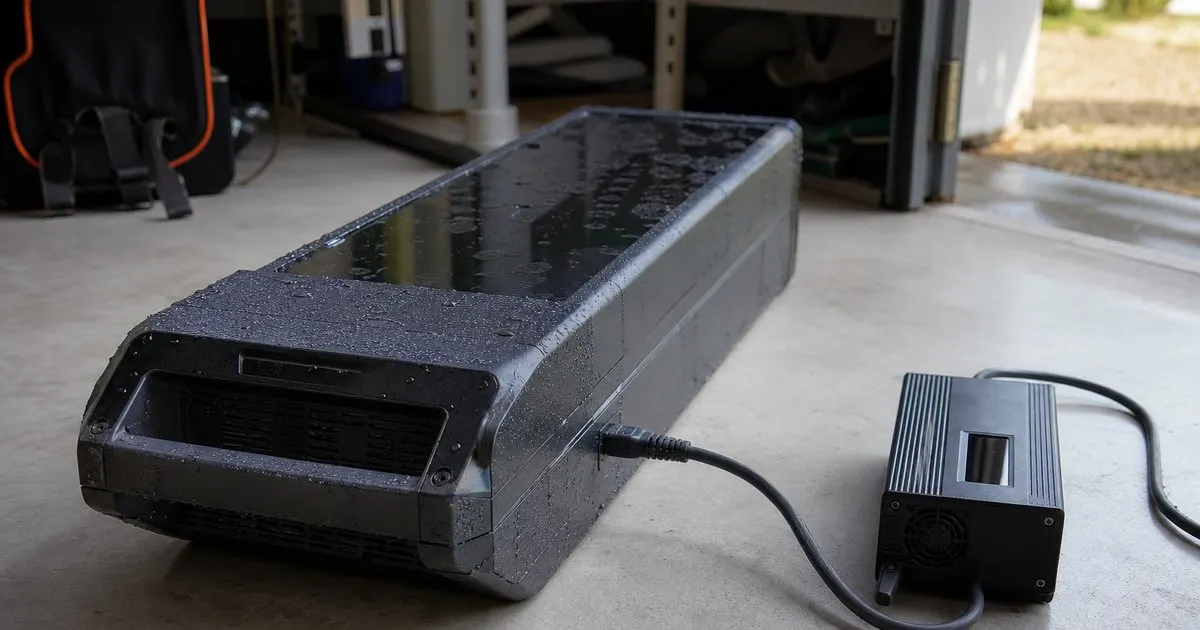
Why an efoil pack ages differently from the battery in your phone
An efoil battery is a large lithium pack asked to deliver high current for an hour, often while warm, then to sit for days between rides. That combination of heavy discharge, heat, and idle time is harder on cells than the gentle cycling a phone sees. Every full cycle costs a little capacity, but heat and time spent at full charge cost more, which is why two owners with the same board and the same number of sessions can end up with very different range after three seasons. Related: How do you choose the right electric hydrofoil board for calm coastal waters?
The cost side makes this worth caring about. On premium boards the battery is typically a significant fraction of the total package price, and the manufacturer's replacement is almost always the only option since packs are proprietary and sealed. Treat the battery as the asset it is: your goal is to delay the day when your usable range no longer covers the sessions you want, and most of that delay comes from charging and storage discipline rather than from riding style. Related: What battery range should a premium efoil board realistically deliver on a full charge?
Keep reading: How do you choose the right electric hydrofoil board for calm coastal waters?, What battery range should a premium efoil board realistically deliver on a full charge?, Which wing and mast setup suits a beginner learning to ride an efoil?. See how Efoilvault helps you the rider guide to premium electric hydrofoil boards.
Charging habits that add seasons to a pack
Let the battery cool before you charge it. A pack that comes off the water warm from a long session should rest in the shade for a while before it goes on the charger, because charging warm cells accelerates wear. Use only the charger supplied or approved by the manufacturer, on a dry, hard, non-flammable surface, with nothing stacked on top and clear air around it. Keep the charging area away from bedrooms and living spaces, and never charge inside a closed vehicle.
Resist the urge to top off to full immediately after every ride if you will not ride again for several days. Many riders charge to a moderate level after a session and then finish to full the night before the next outing, which minimizes the hours the cells spend at their highest voltage. If your charger or app offers a storage or partial charge setting, use it. Check the connector pins for salt, sand, or corrosion before each charge, and dry them with a soft cloth, since a poor connection creates heat exactly where you do not want it.
Storage level, temperature, and long off-seasons
For any layoff longer than a couple of weeks, bring the pack to the storage charge level your manual specifies, which for lithium chemistries is generally a partial charge rather than full or empty. Store it indoors in a cool, dry room with a stable temperature, never in a garage that freezes or an attic that bakes. Put it on a shelf where it cannot fall and where nothing can fall on it, and consider a fire-resistant battery bag or a metal cabinet as an extra layer of protection.
Set a reminder to check the charge level every few weeks during the off-season. Lithium packs self-discharge slowly, and the electronics inside draw a small current even when idle, so a pack left at a low state for months can drift into a deep discharge that the management system may refuse to recover from. A short top-up back to the storage level once a month is enough. When spring arrives, charge fully, let the pack rest, and ride a conservative first session while you confirm the range still matches your expectations.
Warning signs, safety, and when to call the dealer
Learn what normal looks like so you notice abnormal quickly. A pack that runs noticeably warmer than usual, that charges much faster or slower than it used to, that shows an error code, or that loses range suddenly rather than gradually deserves a call to the dealer before the next ride. Any swelling of the casing, a bulging seal, a sweet or chemical smell, or evidence of water inside the connector housing means stop using it immediately and isolate it outdoors on a non-flammable surface away from buildings. Related: How long does it realistically take to learn riding a luxury efoil board?
Do not attempt to open, repair, or rebalance a sealed efoil battery yourself, and be wary of third parties offering to recell a proprietary pack. Beyond the safety issue, a modified pack usually voids the warranty and may not communicate properly with the board's electronics. Keep your purchase receipt and serial numbers, register the battery with the manufacturer if they offer it, and ask your dealer what the warranty covers regarding capacity loss, because that policy varies widely between brands and is worth understanding before you need it. Related: Why does board volume matter so much for stability on a luxury efoil?
- Heat and time spent at full charge age an efoil battery faster than the number of rides does.
- Let the pack cool before charging, use only the approved charger, and charge on a non-flammable surface away from living areas.
- Store at the partial charge level your manual specifies, indoors, and check the level every few weeks over long layoffs.
- Swelling, unusual heat, sudden range loss, or water in the connector means stop riding and call the dealer.

Julien Jimenez
Julien Jimenez is an independent software builder based in Paris. He designs, ships, and operates focused SaaS products for small businesses and independent professionals. Read the full author page.
Flight Above the Water, Refined
The rider guide to premium electric hydrofoil boards. Efoilvault is built to help you put this into practice.
Compare boardsMore from the Efoilvault blog

How do you choose the right electric hydrofoil board for calm coastal waters?
What battery range should a premium efoil board realistically deliver on a full charge?
Which wing and mast setup suits a beginner learning to ride an efoil?
Get the complete electric hydrofoil (efoil) boards guide
Our full buying guide, the price guide, and new research as we publish it. One email, no spam, unsubscribe any time.