What should a rider look for in an efoil hand controller before buying?
The hand controller is the only part of an electric hydrofoil you touch for the whole ride, yet it rarely gets more than a line on the spec sheet. Here is how to judge one properly before committing to a board.
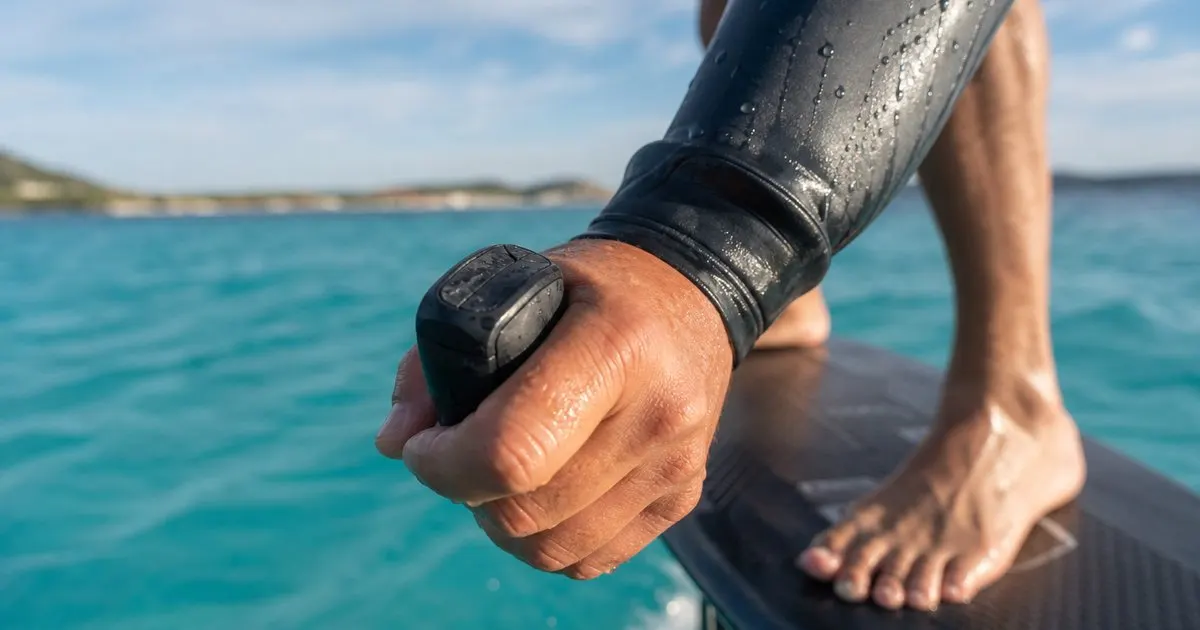
Why the controller deserves more scrutiny than the motor
Every input you give an efoil passes through a small handheld remote. Board volume, wing shape, and battery capacity define what the board can do, but the controller defines how it feels to do it. A throttle that ramps unevenly makes a forgiving board feel twitchy, and a remote that drops its link for a second at foiling speed will put you in the water. Because you hold it for an hour at a time, often with cold or wet hands, small ergonomic flaws compound in a way that a slightly heavier board never does. Related: How do you choose the right electric hydrofoil board for calm coastal waters?
The practical way to evaluate a controller is to hold it exactly as you would ride: wet, gloved if you ride cold water, and with your arm extended in a natural stance. Notice whether the throttle is thumb driven or trigger driven, whether it sits securely without a death grip, and whether it floats if you let go. Ask if it ships with a wrist lanyard and whether the body is fully sealed or relies on a rubber port cover for charging. These details are difficult to fix after purchase because controllers are proprietary and rarely interchangeable across brands.
Keep reading: How do you choose the right electric hydrofoil board for calm coastal waters?, What battery range should a premium efoil board realistically deliver on a full charge?, Which wing and mast setup suits a beginner learning to ride an efoil?. See how Efoilvault helps you the rider guide to premium electric hydrofoil boards.
Throttle progression, ramping, and rider modes that matter
Throttle feel is the single biggest variable between premium boards. A linear throttle gives you power in proportion to your input, which experienced riders love and beginners find unforgiving, since a nervous squeeze launches the board out of the water. Many premium systems apply a software ramp that softens the first part of the throttle stroke, and the best ones let a dealer or the rider adjust that ramp. When you demo, try holding a fixed speed just above foiling and feel how much effort it takes to keep the board from surging or sagging. Related: Why does board volume matter so much for stability on a luxury efoil?
Rider modes are the second thing to test. A well-designed controller lets you cap top speed and throttle response for a guest or a family member without touching the board itself, then unlock full power for yourself in a few clicks. Some also offer a speed hold or cruise function so you can rest your thumb on long straight runs. Ask how quickly you can change modes on the water, because a mode buried three menus deep is one you will stop using after the first week.
Wireless link, safety cutoffs, and the display in real sun
Radio signals do not travel well through water, so every efoil controller is designed to lose its link when it goes under and cut the motor immediately. That behavior is a feature, and you want to confirm it works instantly when you fall. What separates good systems from mediocre ones is how gracefully they reconnect once the remote is back above the surface. A reconnection that takes several seconds or requires a button press is annoying; one that silently reconnects and then applies whatever throttle you are holding is dangerous, so ask specifically how the board behaves after a fall. Related: Are carbon fiber efoil boards genuinely worth the premium over composite alternatives available?
The display matters more than it seems. On the water you are reading it through glare, spray, and often sunglasses, so a bright and simple screen showing battery state and current mode beats a dim, information-dense one. Check whether the battery indicator is a percentage or a set of bars, and whether it reflects the board battery, the controller battery, or both. If you plan to ride in gloves, confirm the buttons are large enough to work by feel, and look at how the charging port is protected, since a corroded port is a common way a controller dies.
Battery life, spares, and what to test during a demo
A controller should outlast the board battery on every session with margin to spare, ideally lasting several sessions on one charge. Ask how it charges, whether a magnetic or sealed contact is used, and how long a full charge takes. Because remotes are proprietary, price a replacement before you buy the board. A lost or drowned controller ends your day, and some owners keep a spare in the bag for that reason, so knowing the replacement cost is part of understanding the true price of the package. Related: What battery range should a premium efoil board realistically deliver on a full charge?
Turn your demo into a controller test. Ride for at least twenty minutes and notice whether your thumb or forefinger fatigues. Fall on purpose with the throttle engaged and confirm the motor cuts instantly. Let the remote sit in the water for a moment and see how it reconnects. Switch modes while floating. Read the screen with the sun behind you and then in front of you. If any of these steps feels awkward, it will feel worse on your fortieth session, and that is the moment to ask the dealer whether another board in the range uses a different remote.
- The controller shapes how a board feels more than most people expect, so test it with wet hands in a riding stance.
- Adjustable throttle ramping and rider modes make one board suitable for both beginners and experienced riders in the same household.
- Confirm the motor cuts instantly when the remote submerges and that it reconnects safely rather than applying stored throttle.
- Price a replacement remote before purchase, because it is proprietary and losing it ends the session.

Julien Jimenez
Julien Jimenez is an independent software builder based in Paris. He designs, ships, and operates focused SaaS products for small businesses and independent professionals. Read the full author page.
Flight Above the Water, Refined
The rider guide to premium electric hydrofoil boards. Efoilvault is built to help you put this into practice.
Compare boardsMore from the Efoilvault blog

How do you choose the right electric hydrofoil board for calm coastal waters?
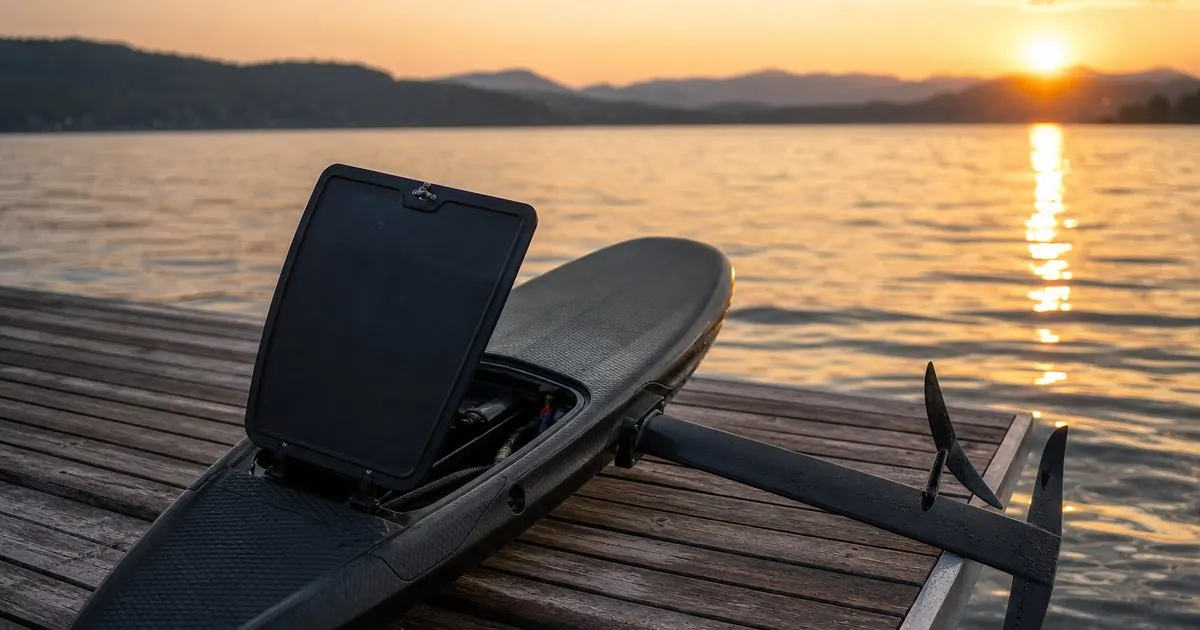
What battery range should a premium efoil board realistically deliver on a full charge?
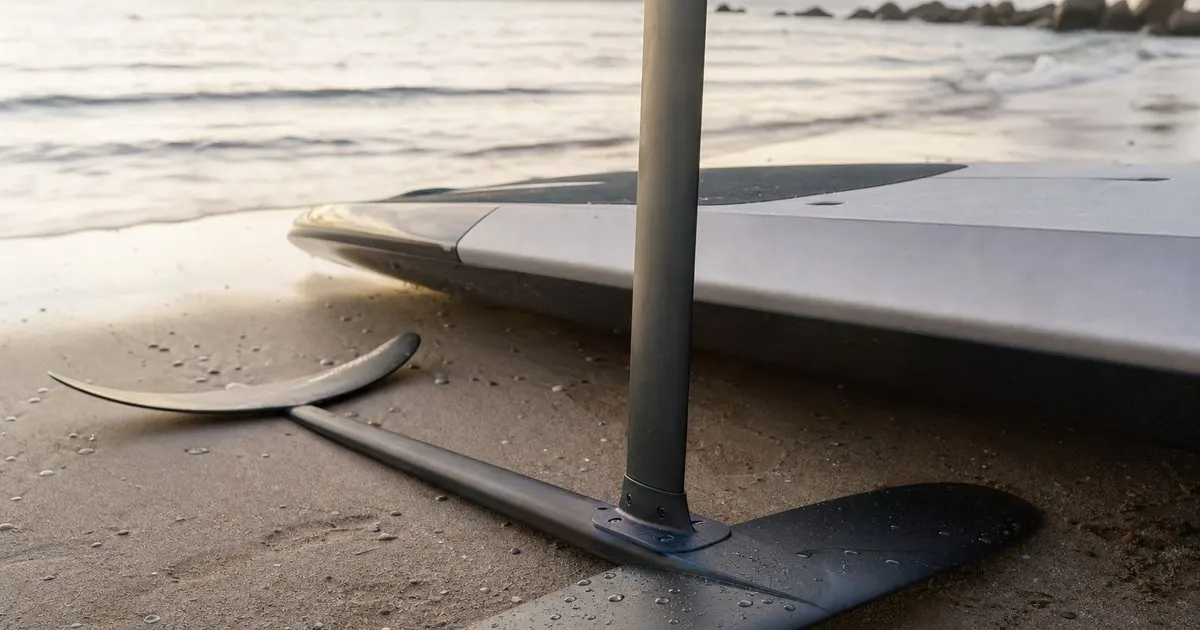
Which wing and mast setup suits a beginner learning to ride an efoil?
Get the complete electric hydrofoil (efoil) boards guide
Our full buying guide, the price guide, and new research as we publish it. One email, no spam, unsubscribe any time.