Which is better for a luxury efoil, a propeller drive or a jet drive?
Premium electric hydrofoils use either a guarded propeller or an enclosed jet impeller to push water. Each has real advantages in efficiency, safety, and upkeep, and the right choice depends on who rides and where.
How each drive actually moves water
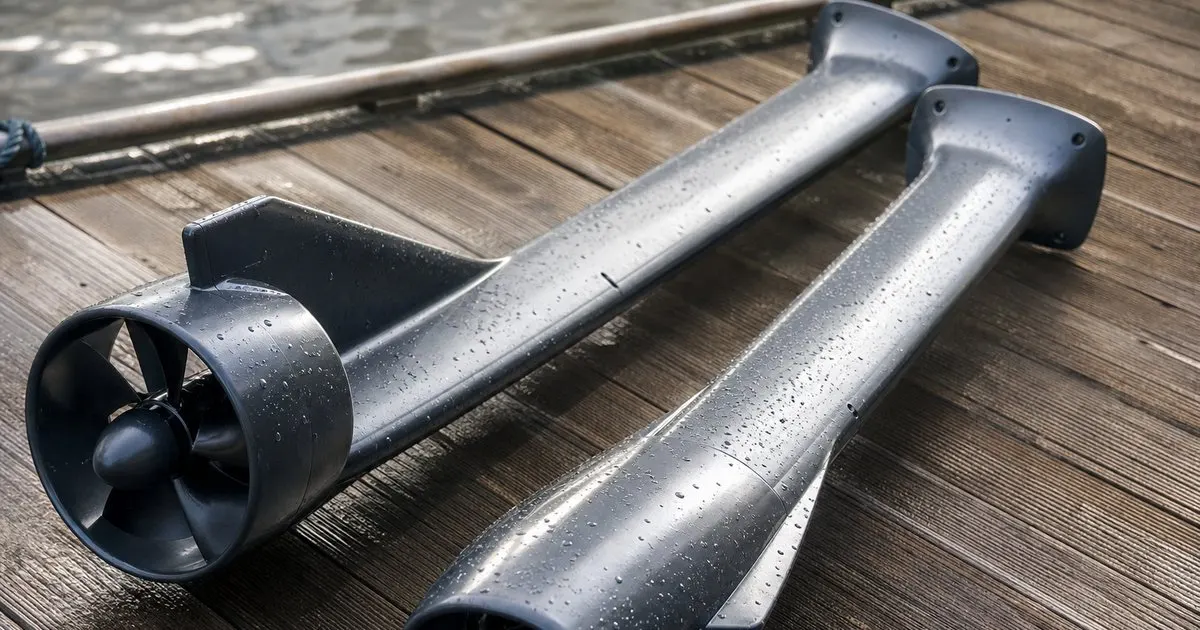
A propeller drive mounts an electric motor on the mast with a prop behind it, usually inside a duct or a protective guard on premium boards. The blades bite a large column of water and push it back with relatively little energy lost, which is why props remain the default in most marine propulsion. A jet drive encloses an impeller inside a housing; water is drawn through an intake, accelerated, and expelled through a nozzle. Nothing sharp is exposed, and the unit tends to feel smooth and quiet underfoot. Related: How do you choose the right electric hydrofoil board for calm coastal waters?
The difference in feel is noticeable on a demo. Prop-driven boards often deliver a firmer, more immediate push when you squeeze the throttle, while jet boards tend to feel softer off the line and build speed more progressively. Neither is right or wrong, but riders coming from surf or wake backgrounds often prefer the directness of a prop, while newcomers and families sometimes find the jet's gentler response reassuring during the learning phase when throttle control is still developing.
Keep reading: How do you choose the right electric hydrofoil board for calm coastal waters?, What battery range should a premium efoil board realistically deliver on a full charge?, Which wing and mast setup suits a beginner learning to ride an efoil?. See how Efoilvault helps you the rider guide to premium electric hydrofoil boards.
Efficiency, range, and top speed in practice
As a general rule, a well-designed ducted propeller converts battery energy into thrust more efficiently than a jet, particularly at the moderate cruising speeds where most efoil sessions are spent. That efficiency shows up as longer ride time from the same pack and a higher achievable top speed. Jet drives lose some energy pushing water through a constrained housing and nozzle, and that loss can translate into somewhat shorter sessions on a comparable battery. Related: What battery range should a premium efoil board realistically deliver on a full charge?
The honest caveat is that design quality matters more than category. A refined jet on a premium board can outperform a mediocre prop, and manufacturers continually improve both. Rather than trusting a rule of thumb, compare the manufacturer's stated ride time under similar conditions, ask the dealer what actual owners report, and pay attention to how much throttle you need to hold a comfortable cruise during a demo. If you are consistently near the top of the throttle to stay on foil, that drive is working hard for your weight and wing choice. Related: Which wing and mast setup suits a beginner learning to ride an efoil?
Safety, weeds, and the family question
The safety argument is the main reason jet drives exist on efoils. With no exposed blades, a fall onto the mast or a bump against a swimmer carries far less risk of a laceration, and that peace of mind is meaningful if children, guests, or beginners will ride the board. That said, premium propeller boards now ship with full guards or enclosed ducts that dramatically reduce contact risk, and the gap between a well-guarded prop and a jet is much smaller than it once was. Ask to see the guard design up close and judge how much blade is reachable by a hand or foot.
Debris tells a different story. Jet intakes can ingest weeds, sand, or small debris and lose thrust until they are cleared, which sometimes requires flipping the board or removing the intake grate. Props with guards can also foul on weeds, but they are generally easier to reach and clear on the water. If your home water is a weedy lake, a shallow sandy inlet, or a river with floating debris, ask the dealer how each system handles fouling and how quickly a rider can clear it without tools. Related: Why does board volume matter so much for stability on a luxury efoil?
Maintenance, noise, and which rider each drive suits
Propellers are simple to inspect and cheap to replace, and a spare prop in the bag solves most on-the-water damage. Jet housings have fewer exposed parts to ding but are harder to inspect internally, and a bent or chipped impeller usually means a dealer visit. Both need a thorough freshwater rinse after saltwater and periodic checks of the seals and bearings. Noise is subjective, but many riders find jets slightly quieter above the water, while props with a good duct are quiet enough that the difference matters little at riding speed.
In practical terms, a propeller drive suits the rider who wants maximum range, top speed, and the option to swap props for different characteristics, and who rides mostly alone or with experienced friends. A jet drive suits households where the board will be shared with children or nervous first-timers, and riders who value the smooth feel and blade-free reassurance over the last increment of efficiency. Whichever you lean toward, demo both if the dealer offers them, because the difference in feel is easier to sense than to describe.
- Ducted propellers generally deliver more thrust per watt, which means longer sessions and higher top speed on comparable batteries.
- Jet drives shield all rotating parts, which is reassuring for families and beginners, though modern prop guards narrow the gap.
- Jets can lose thrust when weeds or sand enter the intake and are harder to clear on the water than a guarded prop.
- Design quality matters more than category, so demo both and compare ride time and throttle effort in real conditions.

Julien Jimenez
Julien Jimenez is an independent software builder based in Paris. He designs, ships, and operates focused SaaS products for small businesses and independent professionals. Read the full author page.
Flight Above the Water, Refined
The rider guide to premium electric hydrofoil boards. Efoilvault is built to help you put this into practice.
Compare boardsMore from the Efoilvault blog

How do you choose the right electric hydrofoil board for calm coastal waters?
What battery range should a premium efoil board realistically deliver on a full charge?
Which wing and mast setup suits a beginner learning to ride an efoil?
Get the complete electric hydrofoil (efoil) boards guide
Our full buying guide, the price guide, and new research as we publish it. One email, no spam, unsubscribe any time.