What costs does owning a luxury efoil add beyond the purchase price?
The sticker price of a premium electric hydrofoil is only the beginning. Spare batteries, wings, transport, storage, insurance, and eventual replacements shape the real cost of ownership over the first few seasons.
The purchase price is the floor, not the total
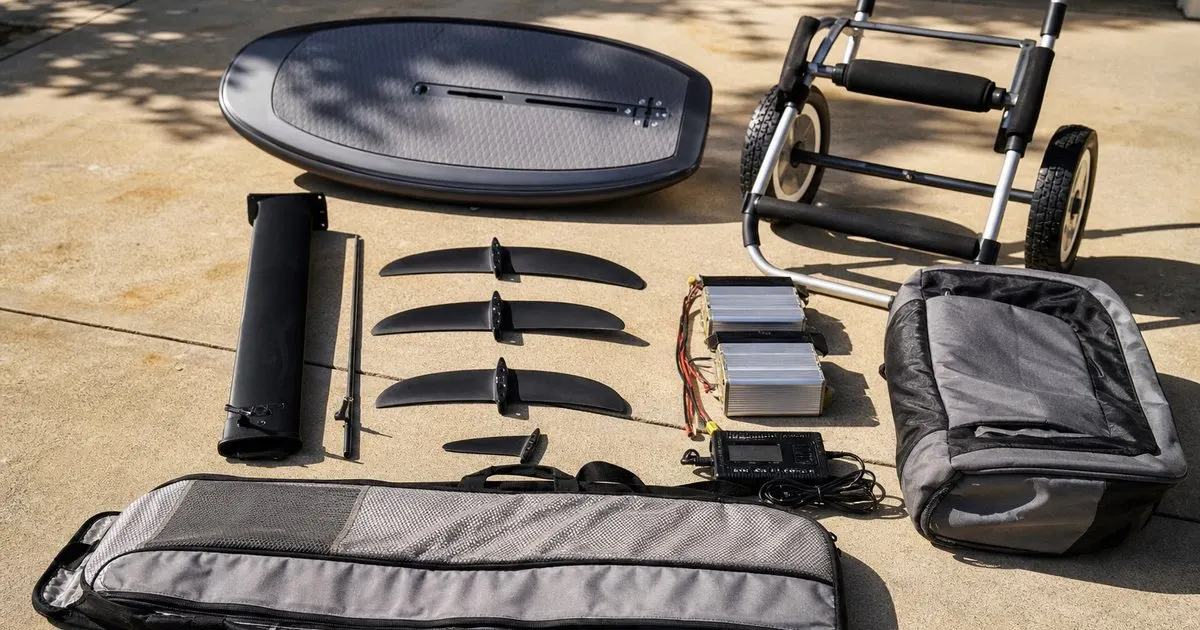
The boards this guide covers typically sit between roughly 5,000 and 15,000 dollars for a complete package, which normally means a hull, one battery, a charger, a mast, one wing set, and a controller. That is enough to ride, but rarely enough to ride the way you imagined. The first additions most owners make are a second wing for different conditions or for a second rider of a different weight, a proper padded bag, and a beach cart, and those alone can add a meaningful sum in the first month. Related: Which wing and mast setup suits a beginner learning to ride an efoil?
The second battery is the big-ticket decision. One pack means one session and then hours of charging; two packs mean a full day on the water and a spare if one fails. Because the battery is proprietary and represents a substantial share of the package price, a second pack can push the total well beyond what you first budgeted. Ask the dealer for the current price of every accessory you can foresee wanting, and add it to the board price before you decide, rather than discovering the number after the board is in your garage. Related: How do you choose the right electric hydrofoil board for calm coastal waters?
Keep reading: How do you choose the right electric hydrofoil board for calm coastal waters?, What battery range should a premium efoil board realistically deliver on a full charge?, Which wing and mast setup suits a beginner learning to ride an efoil?. See how Efoilvault helps you the rider guide to premium electric hydrofoil boards.
Consumables and wear items over the first few seasons
An efoil has few consumables, but the ones it has are not cheap. Propellers or impellers chip on sandbars and rocks, and most owners keep a spare. Wings pick up leading-edge dings that can be repaired but sometimes justify replacement, and a bent fuselage or a stripped mast bolt is a real expense. Bolts, o-rings, and seals should be inspected and periodically replaced, and controller charging contacts and lanyards wear out. None of these ruin a budget individually, but together they form a steady drip over a season.
The largest eventual cost is the battery itself. Every lithium pack loses capacity with time and cycles, and after a number of seasons that depends on your habits the usable range will no longer cover the sessions you want. Plan for that replacement from day one by setting aside a portion of what the dealer quotes for a new pack each year, so the expense arrives as a planned purchase rather than a shock. Good charging and storage habits stretch that timeline, and they are the best return on effort in efoil ownership.
Transport, storage, insurance, and the logistics bill
Ownership costs extend into your driveway and your closet. If your current vehicle cannot carry a thick hull and a mast comfortably, a rack, a trailer, or a different car enters the conversation. Storage in a climate-controlled space is ideal for the battery and the hull, which for some owners means a paid unit or a garage upgrade. Then there is the water itself: launch fees, marina access, parking, and in some states a registration fee if the board is classified as a motorized vessel.
Insurance is the item most buyers forget. Standard homeowners or renters policies may treat a motorized watercraft differently from other sporting goods, and coverage for theft, damage, or liability on the water is not guaranteed. Ask your agent specifically, and if the answer is unsatisfying, price a small marine or specialty policy. Given that the board is a high-value item that travels in a car, sits at a beach, and moves at speed near other people, some form of liability and theft coverage is a reasonable part of the annual cost.
Budgeting honestly and where the money is well spent
A practical way to plan is to build three numbers: the day-one total including the board and the accessories you will genuinely buy in the first month, an annual running figure covering wear items, insurance, storage, and fees, and a reserve building toward the eventual battery replacement. Seeing those three together usually makes the choice between two boards clearer than the sticker price alone, and it can reveal that a slightly cheaper board with a more affordable battery is the better long-term buy. Related: Are carbon fiber efoil boards genuinely worth the premium over composite alternatives available?
Spend generously where it protects the investment and cautiously where it does not. A good bag, a cart, a quality charger setup, and a proper storage arrangement pay for themselves by preventing damage. A second battery is worth it if you will actually ride long days; it is a luxury if you ride an hour on weekends. Buying from a dealer with a real service department costs a little more but shortens every repair, and it protects resale value, which for a premium efoil with a documented history is meaningfully better than for an unsupported board. Note that some links on this site may earn a commission, which never changes this advice. Related: What battery range should a premium efoil board realistically deliver on a full charge?
- A complete premium package is only the start; a second wing, a bag, a cart, and especially a second battery add substantially.
- Props, wings, bolts, and seals wear steadily, and the battery will eventually need a costly proprietary replacement.
- Transport, storage, launch fees, registration in some states, and insurance form an annual bill many buyers overlook.
- Plan with a day-one total, an annual running cost, and a battery reserve, and spend on what protects the investment.

Julien Jimenez
Julien Jimenez is an independent software builder based in Paris. He designs, ships, and operates focused SaaS products for small businesses and independent professionals. Read the full author page.
Flight Above the Water, Refined
The rider guide to premium electric hydrofoil boards. Efoilvault is built to help you put this into practice.
Compare boardsMore from the Efoilvault blog

How do you choose the right electric hydrofoil board for calm coastal waters?
What battery range should a premium efoil board realistically deliver on a full charge?
Which wing and mast setup suits a beginner learning to ride an efoil?
Get the complete electric hydrofoil (efoil) boards guide
Our full buying guide, the price guide, and new research as we publish it. One email, no spam, unsubscribe any time.